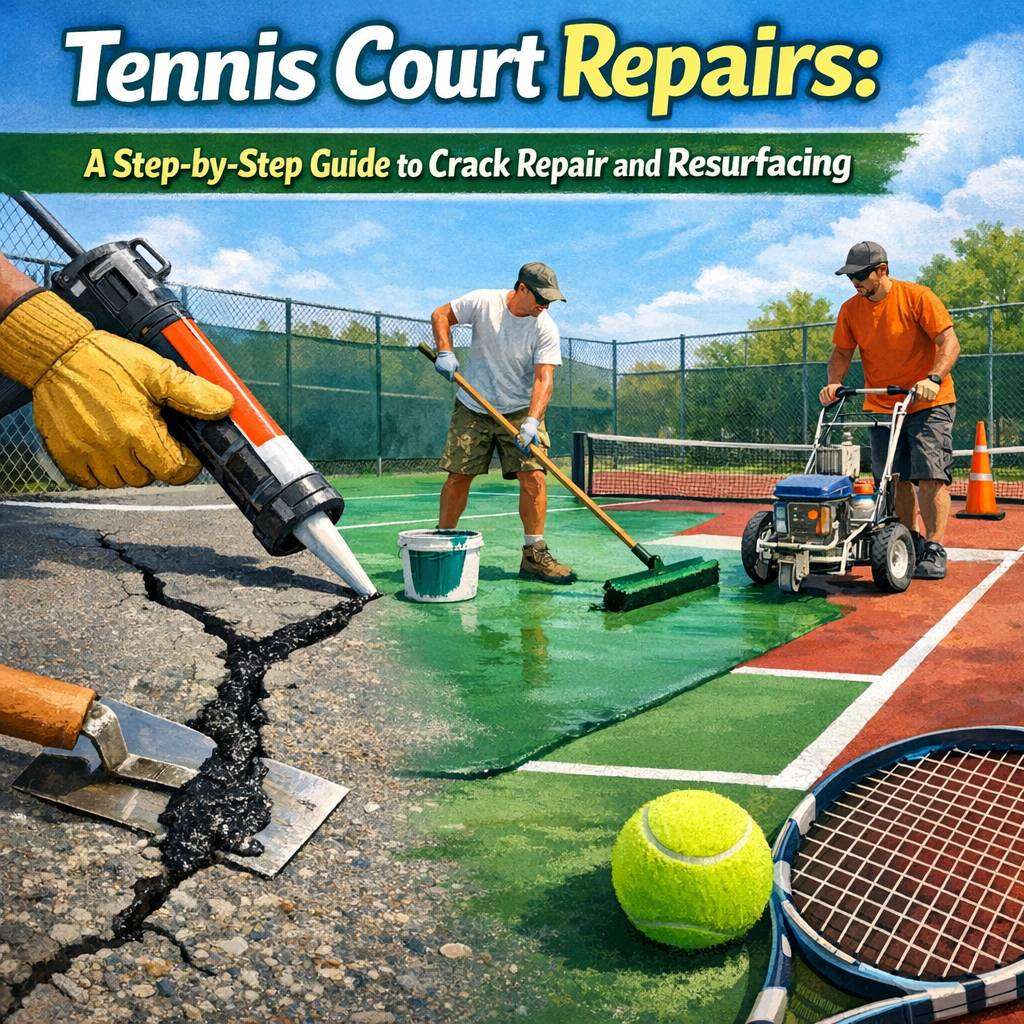
Tennis Court Repairs: A Step-by-Step Guide to Crack Repair and Resurfacing
Why crack repair matters for longevity and performance
Cracks in a tennis court are not just cosmetic issues; they signal structural movement and potential water ingress. If left untreated, cracks can widen, leading to delamination of coatings, uneven ball bounce, and accelerated deterioration of the substrate. Regular tennis court maintenance and timely repairs protect your investment, improve playability, and extend the life of a court installation. Whether you’re working with a hard court, an acrylic surface, or an artificial grass tennis court, addressing cracks before resurfacing saves money in the long term and reduces downtime.
Regular maintenance keeps tennis courts safe and playable for all levels of players. Early detection of cracks, drainage problems, and surface wear prevents costly repairs. Quality tennis court repairs improve bounce consistency, reduce injuries, and extend the court’s lifespan. When choosing restoration options, consider material compatibility, climate, and usage. For regional expertise and detailed guidance, explore the following resource: https://localtenniscourtresurfacing.com/u-s-regions/new-england-northeast/tennis-court-resurfacing-repair-maine/ Additionally, schedules, timing, and budget considerations vary by project scope and facility type for every project.
Assessing the court: identifying cracks and surface condition
Begin with a thorough assessment of all courts, ideally after a dry spell. Note crack length, width, and pattern (transverse, map, or random). Record areas of poor drainage, areas where the surface has begun to debond, and any existing coatings that have delaminated. Check for weed growth through cracks and for signs of moisture beneath the surface. Photograph problem zones for reference during tennis court installation planning or when coordinating with a contractor for tennis court repairs and resurfacing.
Effective tennis court repairs protect playability and safety, extending surface life and reducing downtime. Regular maintenance detects cracks, drains, and surface wear early, allowing affordable fixes before problems worsen. A professional assessment provides accurate recommendations https://www.artificialgrassmaintenance.co.uk solutions, from resurfacing to regrading, ensuring consistent bounce and slip resistance for all players. Choosing licensed specialists guarantees quality materials, timely completion, and long-term cost efficiency for clubs. Trust local expertise for peace.
Here are frequently asked questions about tennis court repairs.
What is involved in tennis court repairs?
Tennis court repairs involve assessing the playing surface for cracks, chips, and wear, sealing or filling cracks, resurfacing with an acrylic coating, repainting lines, and addressing drainage or edge deterioration. The exact scope depends on your court’s surface (asphalt, concrete, or acrylic) and the extent of damage.
How do I know my court needs repairs?
Look for hairline or widening cracks, spalling or chipped areas, fading or peeling coatings, pooling water, uneven bounce, or damaged/ghosted court lines. If issues worsen after seasonal freeze-thaw cycles, a professional inspection is recommended.
How long do tennis court repairs take?
Small repairs (crack sealing or patching) can take 1–2 days. Resurfacing or more extensive repairs typically take 3–7 days, plus additional time for coating cure. Weather and drying times can extend the project.
How much do tennis court repairs cost?
Costs vary by scope and surface. Ballpark estimates:
- Crack sealing/patching: a few hundred dollars to a couple thousand
- Resurfacing (coating the entire court): roughly $6–$12 per square foot
- Line painting: several hundred dollars per court
- Full court replacement or major overhauls: significantly moreGet a written quote tailored to your court’s size and condition. Note that costs depend on court type, access, and regional pricing.
Should I DIY or hire a professional for tennis court repairs?
For most repairs, especially resurfacing and drainage work, hiring a licensed contractor is recommended. DIY can be risky due to surface prep, coating chemistry, curing requirements, and safety. Minor crack sealing can be attempted with proper sealant, but a professional assessment is wise.
What coating options are available for tennis court repairs?
Common options include:
- Acrylic coatings (water-based or solvent-based): most common, durable, and colour-retentive
- Epoxy or polyurethane overlays: strong but can be less flexible in cold weather
- Polyurea or cementitious overlays: fast-curing and durable in tough conditions
- Line repainting with compatible coatingsThe choice depends on climate, usage, and desired playability.
How do I choose a tennis court repair contractor?
Tips:
- Verify license and insurance
- Check references and review a portfolio of similar projects
- Confirm warranty terms (materials and workmanship)
- Obtain written, detailed quotes and material specs
- Ask about product guarantees, curing times, and project timeline
- Look for experience with your court type and coating system
Do tennis court repairs come with a warranty?
Yes, reputable contractors often offer warranties on workmanship and coatings, typically ranging from 2 to 5 years. Warranties usually require proper maintenance and adherence to cure/seasoning guidelines. Read the warranty carefully for coverage details.
Can drainage issues affect tennis court repairs?
Absolutely. Poor drainage can cause ongoing cracking and coating failure. Most repair plans include addressing drainage—grading, French drains, or edge drains—to prevent water from pooling and damaging the surface again.
How often should a tennis court be resurfaced or repainted?
- Resurfacing/recoating: roughly every 5–10 years, depending on usage, climate, and coating type
- Line repainting: every 1–2 years for active courts; longer intervals for less frequent useRegular inspections can help catch wear before it requires a full overhaul.
What maintenance should I perform after tennis court repairs?
- Clean regularly with a court sweeper or soft brush; avoid harsh chemicals
- Remove leaves and debris promptly
- Avoid high-pressure washing or aggressive scrubbing
- Inspect drainage after heavy rains and address clogs
- Recoat or reseal when the surface shows wear or colour loss
- Keep lines visible and reline as needed to maintain playability
What is the typical repair process from start to finish?
- Initial site inspection and written quote
- Surface prep (cleaning, fixing minor defects)
- Crack sealing or injection for structural cracks
- Surface resurfacing or coating application
- Line painting and edge treatments
- Curing time and final quality check
- Maintenance recommendations and, if applicable, warranty documentation
If you’d like, I can tailor these FAQs to your specific court type (asphalt, concrete, or acrylic) and local climate to improve relevance and SEO.
Materials and preparation for repairs
Before filling cracks, ensure the surface is clean and dry. You’ll typically need:
- Crack sealants or injections (epoxy or polyurethane, chosen to suit crack width and substrate)
- A scraper, stiff brush, and compressed air or a shop vacuum to remove debris
- A primer suitable for penetrating coatings
- Resin-based resurfacing material or an acrylic resurfacer
- Reinforcement fabric or mesh for wider cracks if required
- Non-slip aggregate or silica broadcast material for texture during resurfacing
If the court is to be converted to artificial grass tennis court, consider whether you’ll retain the existing substrate or remove and reinstall a fresh surface layer. The choice between tennis court cleaning, renovation, and a full tennis court installation depends on age, substrate condition, and drainage.
Step-by-step guide to crack repair and resurfacing
First, conduct a final inspection and mark all trouble spots. Then prepare the surface by removing loose material and cleaning thoroughly.
- First: Clean and dry the cracks. Remove any vegetation, dust, and loose resin. A dry surface improves adhesion.
- Next: Decide on the repair method based on crack width. Very fine cracks may simply be sealed with a flexible, crack-stopping sealant; wider or deeper cracks often require epoxy or polyurethane injection and, for structural cracks, structural repair products.
- Then: Apply the crack sealant or inject the resin into the crack, ensuring it penetrates the full depth. Use a roller or putty knife to ensure the seam is flush with surrounding substrate.
- Then: For larger cracks, place reinforcement mesh or fabric over the repaired area and seal it in according to the manufacturer’s instructions. This helps prevent reflaking and enhances durability.
- Then: Prepare for resurfacing. If the court surface requires priming, apply the primer and allow it to cure as directed.
- Then: Apply the resurfacing layer. Use an acrylic resin-based layer or an appropriate polymer-modified product for hard courts, following the recommended thickness. If you’re aiming for a uniform playing surface, broadcast a fine, non-slip aggregate and broom into the surface for texture.
- Finally: Cure and finish. Allow sufficient curing time before white line markings or centre lines are re-applied. After curing, perform a light clean and perform initial maintenance checks.
Note: If you are refurbishing an artificial grass tennis court, ensure the sub-base is sound, drainage is adequate, and that the artificial grass is securely attached. Some projects may require removing the old surface before installation for a durable outcome.
Effective tennis court repairs combine professional resurfacing, crack sealing, and proper drainage to restore safety and consistent bounce. Regular inspections catch sunken seams and algae growth before major damage occurs, saving time and money. When planning repairs, prioritize weather window, material compatibility, and court orientation to maximize longevity. For more guidance and specific case studies, visit the following resource: Budget-conscious homeowners should also schedule seasonal checks. https://landscapejuicenetwork.com/forum/topics/tennis-court-moss-killer
Resurfacing options and method for different surfaces
Hard courts and acrylic surfaces respond well to resurfacing with polymer-modified coatings, followed by a colour layer and line marks. For an artificial grass tennis court, you may opt for a fresh synthetic surface with a new grass layer or a refreshed top dressing, depending on wear and pile height. If you’re considering tennis court installation or upgrading an existing facility, evaluate drainage, sub-base stability, and the intended level of play. In all scenarios, select products designed for outdoor exposure and UV resistance to maintain colour retention and slip resistance.
Tennis court maintenance and cleaning after repair
Post-repair care is crucial for longevity. Regular tennis court cleaning removes dust, leaves, and mould, reducing slip hazards and UV fade. Establish a maintenance routine that includes:
- Sweeping or brushing to prevent debris buildup
- Occasional power washing with a gentle cycle to avoid surface damage
- Prompt removal of standing water to prevent algae growth and freeze-thaw cracking
- Periodic re-application of line markings and protective coatings as required by usage
- A yearly review of substrate drainage and a routine inspection for new cracks
Common issues and troubleshooting
Even with careful repair, problems can arise. Common issues include premature spectral fading of colour, blisters in the coating, or reappearance of cracks due to substrate movement. If blistering or delamination occurs, verify adhesive compatibility and consider re-priming before applying a fresh resurfacing layer. Persistent cracking after resurfacing may indicate ongoing structural movement or inadequate drainage; reassess foundation and consult a specialist about potential full-depth resurfacing or a change in surface type.
If you’re a facility owner or contractor, these guidelines align with best practices for tennis court maintenance and tennis court repairs. For many venues, a balanced approach—combining regular cleaning, timely crack repair, and measured resurfacing—delivers excellent playability and extended life for artificial grass tennis courts and hard surface courts alike.