Integrating Design Thinking into Your New Product Development Process
Design thinking has moved from buzzword to essential capability for any organisation serious about bringing meaningful products to market. For product development companies and SMEs alike, weaving design thinking into the fabric of the new product development process can sharpen insights, reduce risk, and accelerate time to market. In this article, we’ll explore practical ways to embed design thinking across the stages of development of new products, supported by examples and strategies suitable for a variety of industries.
Understanding design thinking in the context of product development
Design thinking is a human-centred, iterative problem-solving approach. At its core, it emphasises deep user empathy, rapid experimentation, and reframing problems to uncover novel solutions. For a new product development company, this means shifting from a predominantly feature-led mindset to one that starts with user needs, behaviours, and contexts. When applied to the development of new products, design thinking acts as a north star, guiding prioritisation, concept testing, and iteration.
The value is not just in flashy prototypes, but in the discipline of learning quickly what works for real users, and discarding what does not with minimal waste. This aligns closely with the goals of many product development services, whether you operate as a product development consultancy or partner with a dedicated firm offering new product development services.
Start with empathetic insight
The first phase of design thinking—empathise—is where you gather rich insights about users, customers, and stakeholders. In practice, this means user interviews, contextual inquiry, and mapping experiences across the end-to-end journey. For a new product development company, creating a robust discovery process helps avoid late-stage surprises.
Tips for embedding empathy:
- Develop a diverse set of users and use cases to capture different needs and constraints.
- Use lightweight ethnography to observe how customers work today and where friction lies.
- Translate findings into human-centric problem statements that guide ideation.
By grounding ideation in real-world contexts, teams can surface problems worth solving rather than simply collecting feature requests.
Define meaningful problems
After gathering insights, the define stage reframes insights into actionable design challenges. Clear problem statements (often framed as “How might we…”) help teams stay focused on user value rather than internal convenience. In a product development new environment, precise problem definitions prevent scope creep and ensure alignment with business goals.
A practical approach for agencies and consultancies is to create a small set of top-priority problem statements tied to measurable outcomes, such as a specific reduction in time-to-use, a quantified improvement in user satisfaction, or a target cost reduction. This creates a strong bridge between design thinking and the commercial realities of product development.
Ideate with breadth and speed
Ideation is where ideas flow freely, but design thinking emphasises quantity over quality and encourages divergent thinking. Break out of the “one perfect solution” mindset by running multiple parallel concepts that address the same problem from different angles. Involving cross-functional teams—engineering, design, marketing, and sales—helps surface constraints early and fosters creative tension.
Techniques to boost ideation:
- Lightning workshops with time-boxed brainstorming.
- Crazy-eights or storyboard brainstorming to visualise use in context.
- Co-creation sessions with end-users or pilot customers to ground ideas in reality.
Remember to capture ideas rapidly and prioritise them later using a structured filter that weighs desirability, feasibility, and viability.
FAQ: New Product Development
What is new product development (NPD)?
New product development is the process of bringing a new product to market, from idea generation and concept testing through design, development, testing, launch, and post-launch evaluation.
Why is new product development important for my business?
NPD drives growth, helps you stay competitive, addresses changing customer needs, and can create new revenue streams. It also spreads risk across multiple products instead of relying on a single offering.
What are the main stages of the NPD process?
Common stages include:
- Idea generation
- Idea screening and concept development
- Business case and feasibility analysis
- Product design and development
- Prototype testing and market testing
- Commercialization and launch
- Post-launch review and iteration
How do I validate a new product concept?
Validate through market research, customer interviews, surveys, A/B tests, feasibility studies, and pilot launches. Build a minimum viable product (MVP) or prototype to gather real user feedback.
What role does customer feedback play in NPD?
Customer feedback guides concept selection, feature prioritisation, usability improvements, and pricing decisions. Engaging early and often reduces risk and increases product-market fit.
How long does the NPD process typically take?
timelines vary by industry and complexity but often range from 6 months to 2 years. Agile and stage-gate approaches can help shorten cycles and improve risk management.
What is a product roadmap and why is it important?
A product roadmap is a strategic document outlining planned features, milestones, and timelines. It aligns stakeholders, prioritises work, and communicates vision and progress.
How do I measure the success of a new product launch?
Key metrics include sales revenue, market share, adoption rate, customer retention, cost of customer acquisition, gross margin, and Net Promoter Score (NPS). Post-launch reviews help identify improvements.
What methodologies support effective NPD?
Common methodologies include Stage-Gate (phase-gate) processes, Design Thinking, Lean Startup, Agile development, and Value Proposition Design. The choice depends on risk tolerance, industry, and resources.
How should I handle risk in new product development?
Identify risks early, use hypothesis-driven experiments, prioritise high-impact uncertainties, run small controlled tests, and maintain a flexible plan to pivot as needed.
How can teams collaborate effectively in NPD?
Foster cross-functional collaboration (marketing, engineering, design, finance, manufacturing), clear roles, shared objectives, rapid feedback loops, and transparent communication.
What is the difference between incremental and radical NPD?
Incremental NPD improves an existing product with new features or enhancements. Radical NPD creates a fundamentally new product or paradigm, often with higher risk but potentially greater rewards.
How can I protect intellectual property during NPD?
Secure IP through patents, trademarks, copyrights, trade secrets, and robust non-disclosure agreements. Include IP considerations in the early planning stages.
What common pitfalls should I avoid in NPD?
Over-ambitious scope, poor customer insight, misaligned stakeholders, underestimating costs, delaying market testing, and neglecting sustainability or regulatory requirements.
How do I price a new product?
Pricing should reflect value to the customer, costs, competition, and desired margins. Consider tiered pricing, introductory offers, and psychological pricing as appropriate.
When should a company pivot or kill a project?
If repeated tests fail to validate core assumptions, if the product fails to achieve a minimum viable business case, or if market signals indicate lack of demand, it may be time to pivot or discontinue.
What regulatory considerations affect NPD?
Regulatory requirements vary by industry and product type (safety, environmental, data privacy, labeling). Plan for compliance early and engage experts as needed.
How can I scale a successful new product?
Invest in scalable manufacturing, robust supply chain, repeatable sales and marketing processes, and durable product-market fit. Prepare for upgrades and next-generation features.
What is post-launch optimisation in NPD?
Post-launch optimisation uses real-world feedback to refine features, fix issues, adjust pricing, and plan future iterations or line extensions.
Can I perform NPD with limited resources?
Yes. Start with a lean approach: MVPs, rapid prototyping, targeted market testing, and outsourcing non-core activities to control costs while validating the concept.
Prototype and test iteratively
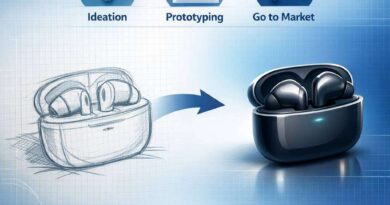
Design thinking thrives on rapid prototyping and user testing. Prototypes can be as simple as sketches or as tangible as interactive models, depending on the stage of development. The goal is to learn fast, not to ship perfect solutions. For product development companies, a staged prototyping approach helps manage risk and budget effectively.
Best practices:
- Build low-cost, high-learning prototypes that reveal core assumptions.
- Test with real users in authentic contexts to gather meaningful feedback.
- Iterate in small, frequent cycles, adjusting the product concept, features, and user experience.
Document test results and translate them into concrete design decisions, such as which features to prioritise, what to deprioritise, and where to adjust usability or performance targets.
New product development drives growth by combining insights, rapid ideation, and rigorous testing to deliver market-ready solutions. Teams align users, stakeholders, and metrics, iterating toward product-market fit with minimal risk. Embracing agile methods accelerates feedback loops and feature prioritization. https://forward-npd.com/ Continuous learning, cross-functional collaboration, and disciplined roadmaps transform ideas into measurable value for customers and the business.
Integrate development and design through sprints
Sprint-based development complements design thinking by creating predictable rhythms for delivering value. In the context of new product development services, sprints help align user insights with technical feasibility and business goals. A well-designed sprint combines design reviews, engineering feasibility checks, and customer feedback loops within a compact cycle.
Consider a sprint structure that includes:
- A design review to validate user-centric decisions.
- An engineering spike to assess technical risk and feasibility.
- A user testing session to validate changes with real users.
- A prioritisation decision that updates the product backlog based on evidence.
This integrated cadence helps a new product development company stay lean while maintaining momentum.
Enable a culture of learning and experimentation
One of design thinking’s greatest strengths in product development is its cultivation of a learning mindset. Organisations that embed experimentation in their DNA tend to outperform over time because they treat uncertainty as a given and iterate towards clarity.
To foster this culture:
- Practise rapid decision-making anchored in evidence rather than hierarchy.
- Encourage cross-disciplinary teams to share learnings openly.
- Establish clear criteria for “go/kill” decisions that reflect user value and financial viability.
This cultural shift is often the differentiator between a conventional product development process and a genuinely innovative one.
Practical integration into your process
If you’re seeking to augment your existing process, consider these practical steps:
- Start with a design thinking audit: Map your current stages and identify friction points where user insights are delayed or ignored.
- Create a design thinking playbook: Document empathy methods, testing protocols, and decision gates so teams can replicate success.
- Train and embed champions: Develop internal capability through targeted training and appoint design thinking champions within each function.
- Collaborate with a product development consultancy or product development companies with a track record in design-led innovation. They can provide external perspective, structure, and expertise across the development of new products and new product development services.
The value for your business
Integrating design thinking into your new product development process doesn’t just enhance the quality of your products; it improves the predictability of outcomes and the efficiency of your teams. By centring on real user needs, teams are better equipped to prioritise features that deliver meaningful value, optimise resource use, and reduce time-to-market. For organisations that rely on the expertise of a product development consultancy or partner with a reliable product development new firm, the framework also supports better collaboration, clearer milestones, and more measurable success.
If you are exploring options, look for collaboration models that blend internal capability with external expertise. Many product development companies offer flexible approaches, from co-located design thinking sprints to remote, iterative cycles within a robust governance structure. Whether your focus is the development of new product concepts, validation with customers, or full-scale production planning, design thinking provides a practical, human-centred compass for navigating uncertainty and realising innovation.
Keywords in action: new product development, development of new products, development of new product, new product development services, product development consultancy, product development new.